

big fires everywhere

Seven nights in a converted train carriage in the Cairngorms. If the children were still deep in their Harry Potter era this would have been quite the thrill. Still, the younger one makes a fair stab at appearing enchanted as we pull up.
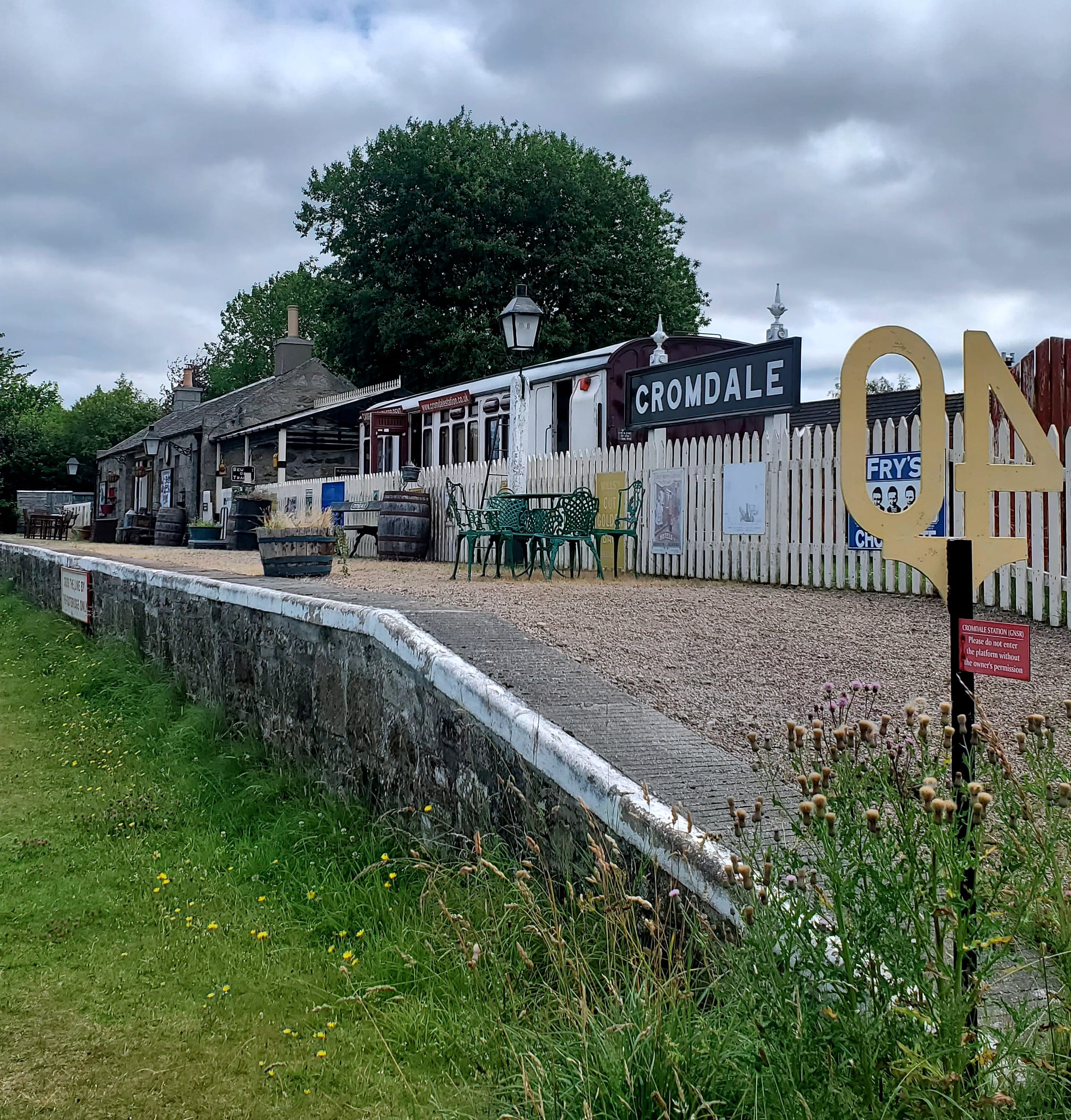
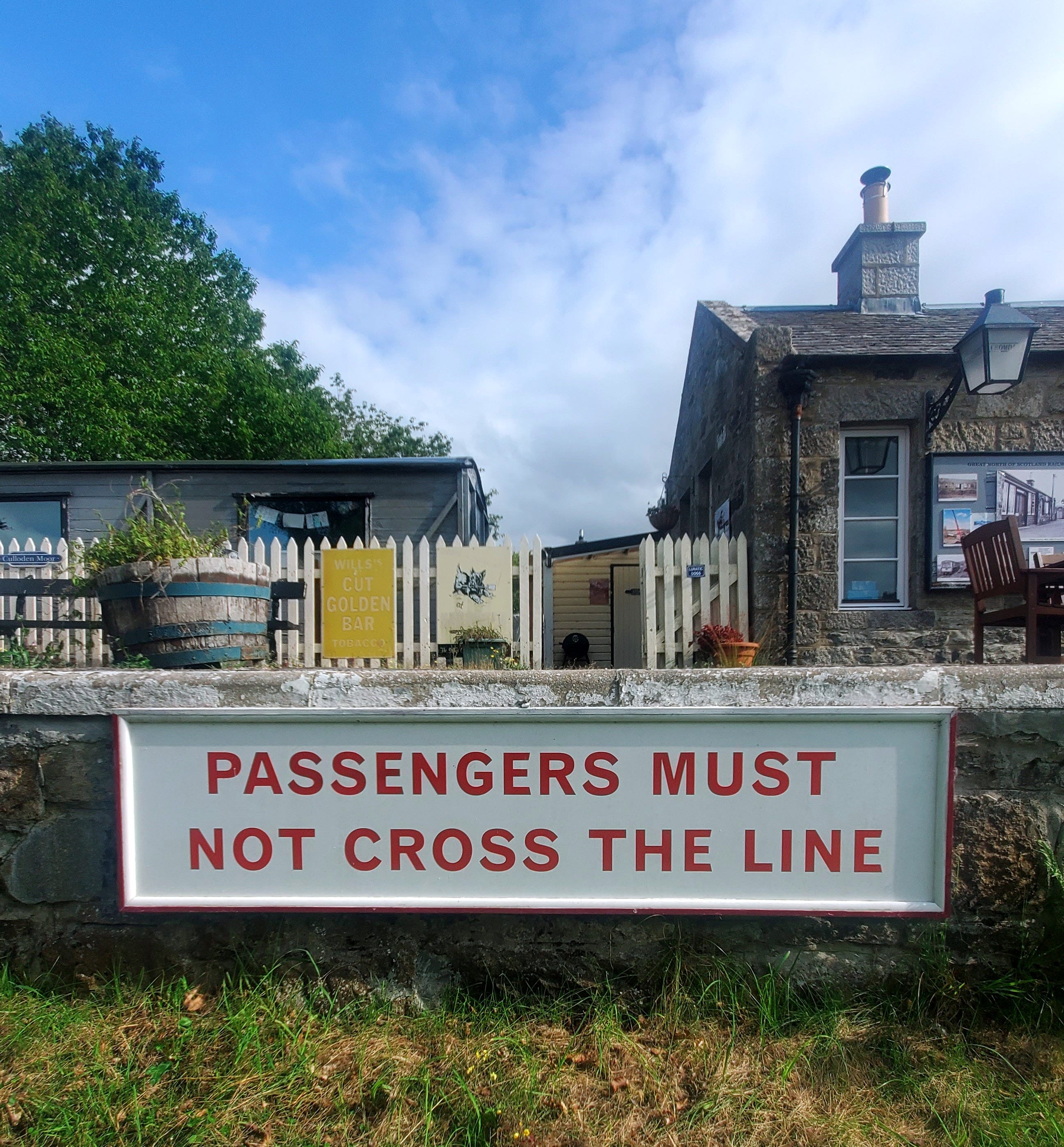
A man I first assume to be a guest staying in the former station next to us introduces himself as Ibo then launches into his spiel. After the quirky key – very old, this train is very old, 1913 – we expect yet more quirks will be revealed but don’t expect the wealth of information he imparts on trains in general, Scotland’s whisky trade both now and then, and his family’s connection to JK Rowling. He’s on a roll: it feels impossible to interject to say we are Scottish; we come up this way often; we don’t have any time for the amber nectar or JK these days. I manage not to say we only booked the train because it was cheap and available.
Eventually, Ibo takes his leave. We settle in, drink tea, play Cluedo. Interrupt play to channel our host when we come across yet more train-related paraphernalia on board.
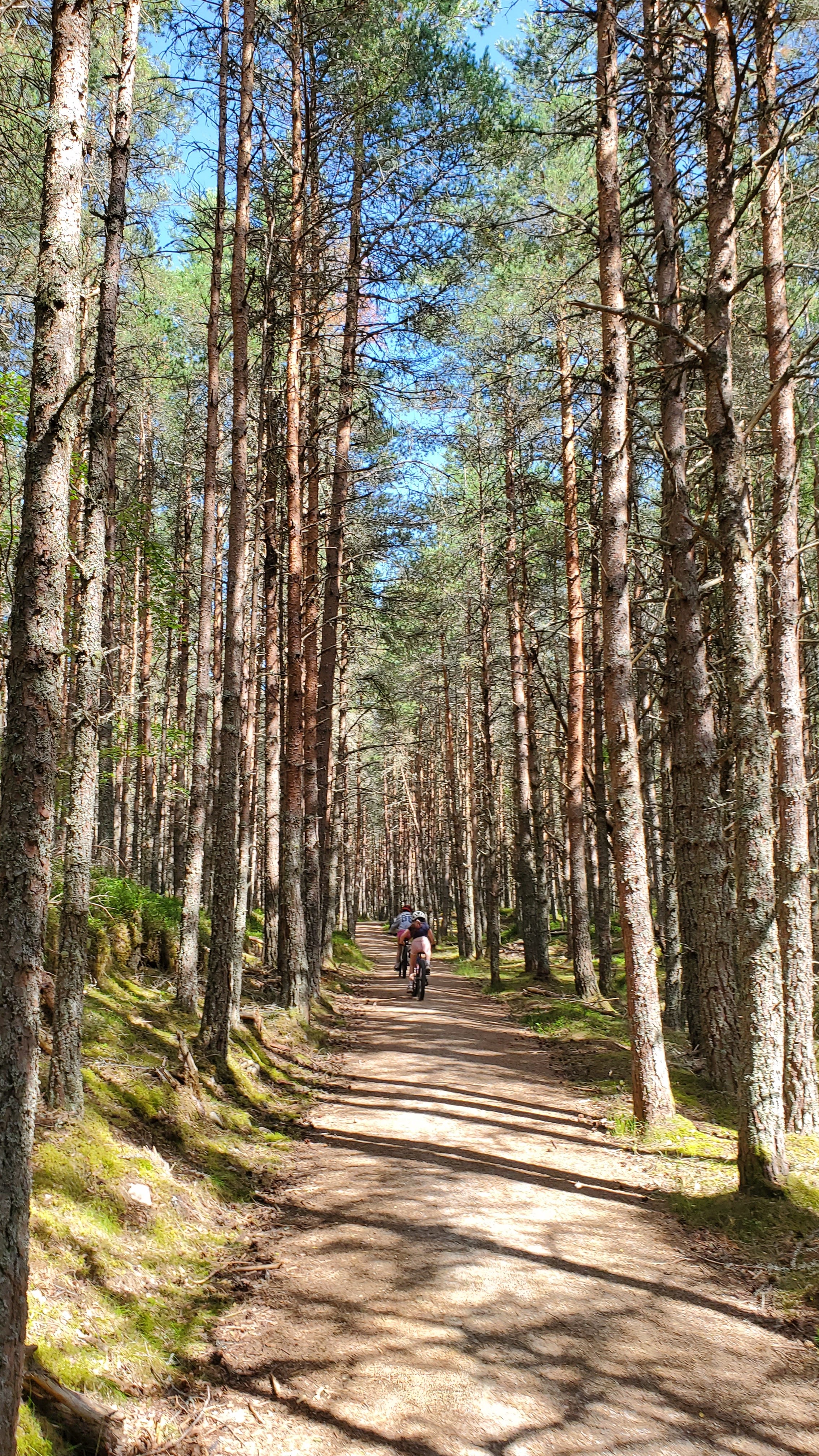
On Monday, grey wisps of smoke can still be seen rising from Glenmore as we make our way north-west for a morning on the trails. The fire is five days old and, going by the eye and reports on social media, seems to be under control though it’s difficult to put what I know of the area into perspective alongside the reels and grid posts. Don’t show me that, I don’t like it, my daughter says, which is a very good reason to put my phone away.
On Tuesday, our elder daughter joins us. My heart bursts as she appears on the platform as though weeks and not days have passed since I saw her last. This is how it will likely be in a few short years if she heads off adventuring. For now, she’s flexing her independence in smaller ways, no longer happy to spend an entire week of her summer holiday away from the city and away from even a sniff of social times. She’s tired from another late night and the early start and slept for much of the three-hour journey.
After lunch in the sun, we seek shade in the forest. We are talking about what she is going to write her English essay on, and she mentions the social media ban; body image. She’s briefly animated about the task so I don’t interrupt her to say that when I was last in the classroom, the latter was already long overdone while the former will be done to the death this year without a doubt. She thinks she could argue that what she saw last week at the Marilyn Monroe exhibition and what she will see at the Barbie one has seeded tweakment culture, and I make encouraging noises since at least she’s offering personal context. Before long, though, we get onto the fires.
She saw the smoke from the train, she says, between her alarm going off and pulling into Aviemore. I remind her that last week in London and on the south coast we weren’t entirely surprised by the blistering heat but finding the sun this hot, the ground this dry here in the highlands feels wrong. This would make a good personal route into a piece of writing that argues the climate emergency is being seen and felt in ways we couldn’t have imagined only a few years ago, we decide. That relatedly, the Scottish Government and local authorities – whether in the countryside or in the cities – seem to be doing a pretty hellish job of fire education, prevention and management which is not at all the same thing as saying the agencies actually fighting the fires are doing a poor job of it. I ask her what it was like walking between Central Station and Queen Street now the route that was shut off following the fire on Union Street has finally reopened. Oh yeah, she says, so it was. I wasn’t thinking about that.
I suggest she might write a paragraph or two about young people having to think carefully about whether they want to have children of their own. We talk about yesterday, when we all oohed and ahhed over the pictures that pinged into the family WhatsApp group of her big cousin’s newest arrival. How that jarred with a conversation we’d had the day before with another of her cousins, who stood in our kitchen talking about how fraught the decision to have children had become and that, for her, it didn’t seem likely.
My elder daughter is ambivalent about procreation which I know from other conversations, though this is more because of the pain, the mess and the inconvenience she believes children bring than for reasons of climate responsibility. She’s 14. Of course it seems painful, messy and inconvenient, and I’ve so far chosen not to get into the ways such reason can be hijacked by biology or circumstance. How the urge to have a child or another child can strike as if from nowhere. That you can become frenzied by your desire to conceive, carry and raise a child of your own even when the circumstances appear impossible.
On Wednesday, we visit old friends who tell us what it was like while the fire was at its worst. They open up their event space on the edge of the Abernethy Forest to the public on Friday nights and it operates as the local pub. Last week, they’d been unsure whether to proceed out of respect for the situation but opening turned out to offer welcome, if brief, respite for the firefighters, gamekeepers and others who turned up weary and blackened at the end of their shift. Their pints had to be swiftly abandoned when another flare-up was reported, none of them hesitating for even a moment.
So awful, terrible, frightening, we say over coffee and bacon rolls once the younger ones have gone outside to mess about on the trampoline. We talk about the fire breaks, which over the past decade have been allowed to fill in in the name of rewilding. It’s a delicate balance between disaster-planning and conservation. I mention last June when what would become known as the UK’s first ever megafire at nearby Dava had frightened the living daylights out of me. We agree that this one feels equal or worse, but it’s an improving picture now, at least.
Eventually, I go with my friend into her studio to look at her paintings. The vast, moody canvases are of her favourite patches of local forest, her favourite local swimming spots, which are also my favourite patches of forest, my favourite swimming spots in part because she has shown them to me. I tell her she needs to get serious about selling her work. Price this properly, I say, making my choice. Yeah, yeah, she says, telling me she’ll frame it for me for Friday when we’re due back at theirs for food and beers in the tipi.
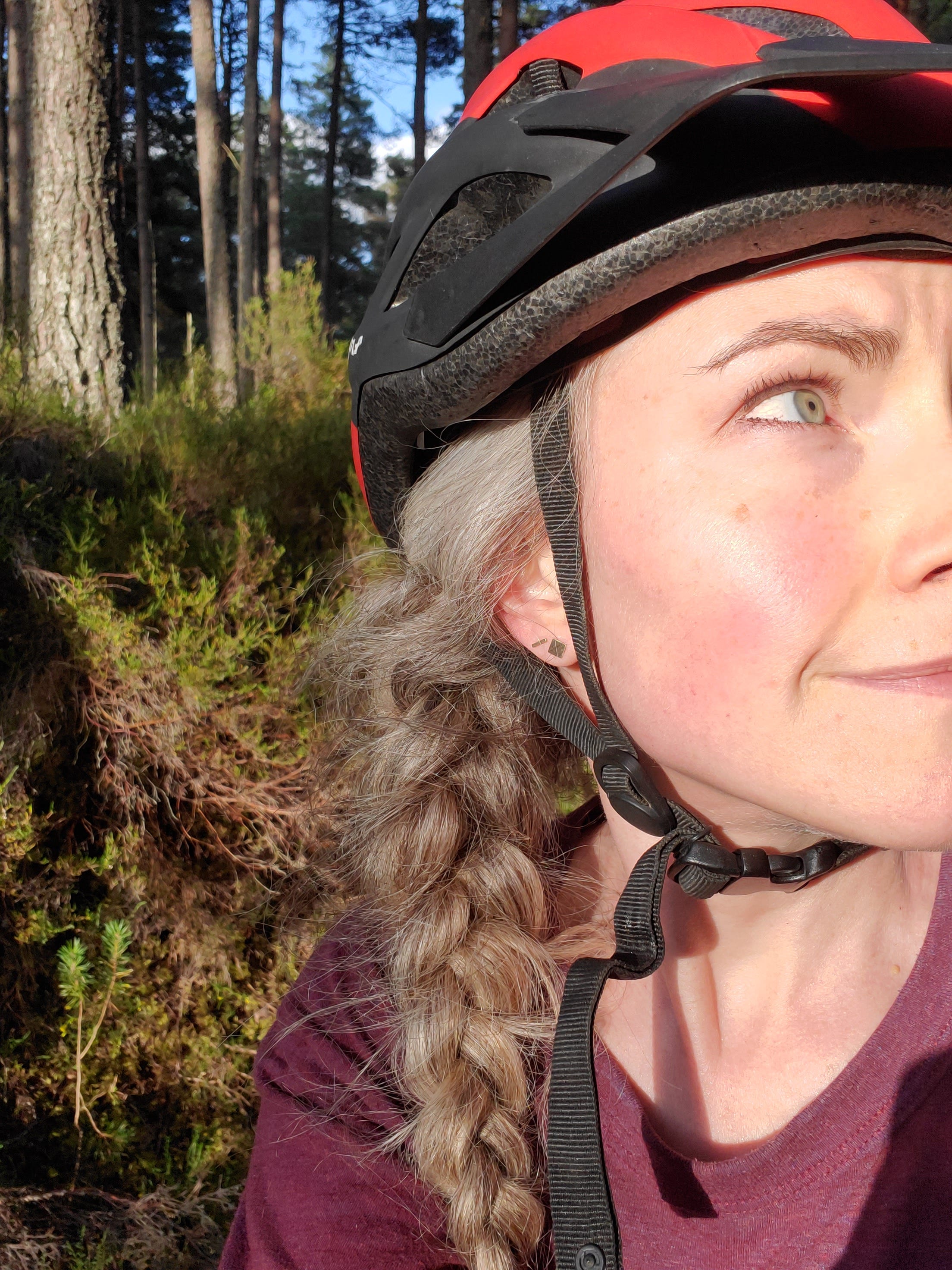
The week rumbles on. We cycle, walk, read, knit, play more Cluedo. We talk less of the fires.
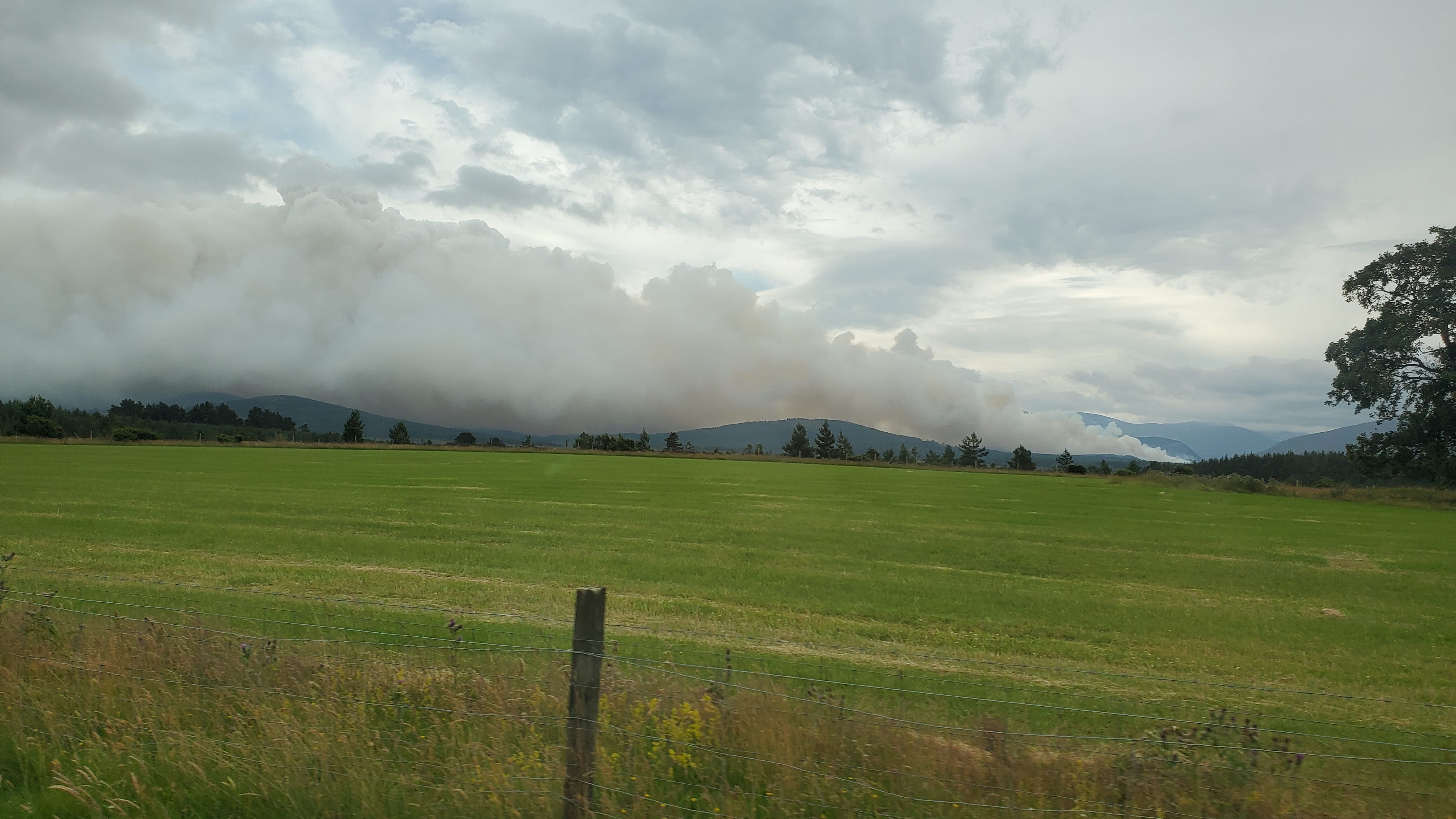
On Friday morning, I wake and open the carriage door. The wind has whipped up overnight and, my phone tells me, so too have the fires. Peat wildfires behave differently to other kinds of wildfires. They might look like they’ve been smothered but smoulder under the surface can continue for weeks under certain conditions. The social media algorithm is insensitive to chronology and so, having followed a number of accounts in recent days, spending any time at all scrolling throws me back and forth in time. It’s eight days ago and those men with the blackened faces have beaters in their hands, skirting the angry edges of the scorched site. It’s the end of June and a drowsy morning mist lingers over Loch Garten. It’s Sunday past and thermal imaging of the fires around Lochan Uaine shows the hotspots. It’s a fortnight ago, and drone footage by a local amateur filmmaker shows the forest verdant, alive. It’s first light this morning and the peat has ignited again; the flames spreading towards the village of Nethy Bridge where our friends stay, the smoke billowing, thickening.
By lunchtime, from high up in the hills, the smoke looks almost like cloud, if only the sky would have clouds of the sort that could grow heavy and then douse the landscape. My friend messages to check I’ve seen her post about the evening being cancelled. I haven’t – we’ve been doing a high ropes course which feels insensitive to admit. I have my painting and some other bits and pieces to collect so I say we’ll drop in late afternoon not thinking that this might be a hard thing to do.
We arrive to see the smoke is thick and threatening behind their house. We hug like there’s been a death or we’re awaiting one. We watch some cyclists attempt to get into the forest — that’s hardly the spirit — then watch them double back on themselves having been turned away by somebody working for one of the many agencies involved in the operation to stop the fire’s spread. My younger daughter comes out of the van to say hello, finds us talking about the fires and turns abruptly on her heels, her fingers in her ears.
The bulldozers are visible through the pines reinstating the fire break which means destroying a section of Dell Woods that is dear to me and even dearer to my friend who grew up here; whose livelihood is here. In a matter of hours, the village will become the first ever in Scotland to be evacuated for fire which is both significant for what it means and insignificant in terms of the numbers affected if you want to get mathematical about it. Across the globe, far bigger fires rage on. Hundreds of thousands of people are being evacuated in France and Spain. All this loss, without an end in sight. It goes on and on and on in what will likely be the coolest summer any of us will ever know.
There are tears in the train carriage tonight. Is that the fire? my younger daughter asks, looking out the windows towards the hills. No, that’s the sunset, pal. She starts to cry and I take her outside to show her we can’t actually see the fire or the smoke from where we are staying, even if we walk all the way around the train, looking in every direction. It’s not good enough because she’s seen it with her own eyes and knows it’s raging just a few miles from here and that fire travels fast. She is inconsolable about the animals; about the birds, then about the future. I just want to have an adulthood, she cries. I don’t want to have to decide not to have my own children. Of course, we talk about local groups she can get involved with and the sorts of gentle climate activism that might appeal to her but even as I’m saying the words, they’re dying on my lips.
We’ll leave for home a day early, first thing, knowing we’re lucky we can go home. Once everyone is quiet and the lights out, I hear the pitter-patter of rain on the carriage roof. It feels hopeful for a second, but then the shower’s over before it’s really begun.
More on parenting through the climate emergency:


It was heart wrenching to read. So much for a child to carry, much for anyone to be fair. As a parent, it seems impossible to console them knowing what we do, even if it a fraction of the whole picture. Sending love, Lindsay. And hope.💗
so poignant, but also enraging that our species are handing this to children.